

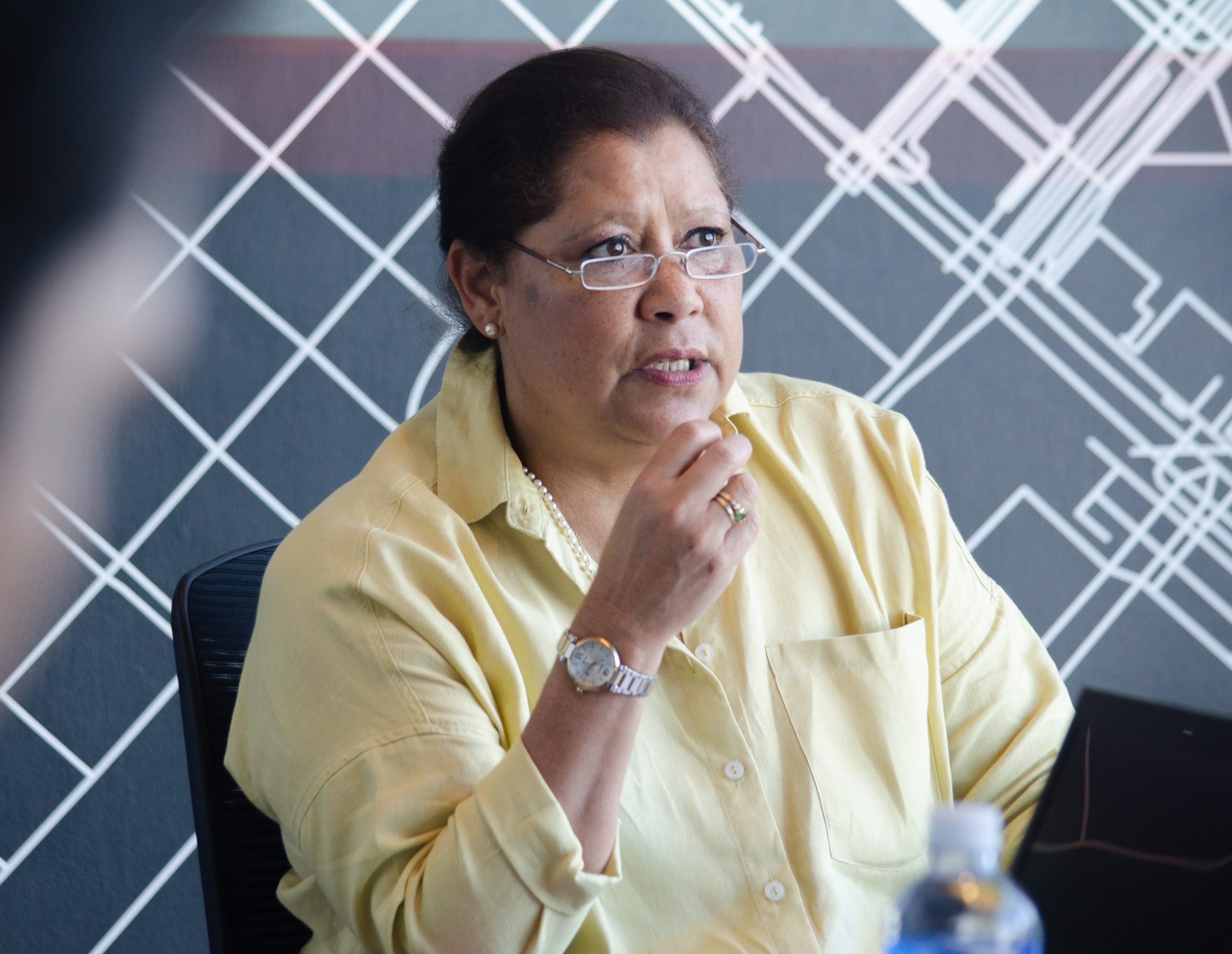
07 Dec Retirement vs Rewiring – Reimagining, Redescovering and Empowering Yourself
The big blow-out!
‘Life’ has a way of creeping up on you!
Before you know it, it is time to retire! For many of us, the realization of actually hitting that magical number can be a shock to the system. Not because we haven’t planned for it, but because it comes with all sorts of stereotypes about growing old and to a large extent, we tend to buy into these stereotypes. Retirement should in fact be the best time of your life. A time free from a home loan, work, children and the stresses of everyday life. It should be the time to live your best life and do all the things that you put off all those years ago. Retirement is simply the next phase of our lives. What would life look like if we decided to live as fully active, healthy and productive members of society for ourselves and not for a company or and organisation?
The UN 2019 Report on Ageing indicates that the world’s population is experiencing a growth in the number and proportion of older persons in their population. The report goes on to say that ‘population aging is poised to become one of the most significant social transformations of the twenty-first century’. Globally, the population aged 65 and over is growing faster than all other age groups and the number of people over 80 is expected to triple by 2050 – that’s in a space of thirty years. Life expectancy at birth has increased over time as has health and well-being. This means that people are not only living longer than their parents’ generation, but also tend to be healthier and more active because of better nutrition, medical support services and lifestyle choices. This means that we will all live longer and the question is, will we have the financial resources to continue to make choices? What if retirement was not a factor in our lives, would we live our lives differently?
Retirement – ‘A necessary adjustment to the workforce’
Retirement in modern society is a practice meaning to leave one job or to cease work after reaching a certain age. In most countries, retirement in around 60 – 65 years of age. For example, the retirement age in the United Kingdom is in the process of moving from 65 – 67 years of age.
Retirement as we understand it was first introduced by the German chancellor Otto Von Bismarck to the German Parliament in 1883. Retirement became part of the German welfare programme which was mandatory and contributions were taken from the employer, employee and the government. In return, the German government provided contributory retirement and disability benefits for its employees.
In the 1920s, a number of American industries started offering pension plans to its workforce and by the 1930s retirement was considered to be a necessary adjustment to the workforce with 60 being the retirement age. President Franklin D. Roosevelt proposed the Social Security Act of 1935, which made workers pay for their own particular retirement.. Over time, this became a universal practice and part of government policy adopted by various countries around the world during the late 19th century and 20th century. It all has to do with the life expectancy and the productivity of people to service industry and the markets.
South Africa Retirement Trends
Tom Hodson of Seven Capital notes that in the 10X Retirement Reality Report (RRR19), out of 15-million economically active South Africans, 67% have no retirement plan. He further notes that:
- 72% of those who have a plan are concerned they will not have enough saved to live on
- 77% of those who do have a plan, accept that they will need to continue earning an income after they retire
- Current retirement returns can expect half the income of those who retired in 2000, due to the current low growth/return environment
- Advances in technology and medicine are extending lifespans and many retirees are living longer.
This means that South Africans may have no other choice than to continue to work post retirement.
Financial Services and Insurances Agencies are adept at calculating your financial forecast for retirement. Some have coupled their financial services offering with lifestyle and healthcare benefits. This means that for as long as you have enough money to cover your investments, you are able to live a comfortable retirement for the rest of your life.
For others, this might not necessarily be the case. With South Africa’s economic downturn and the slow rate of return on investments, saving for retirement or for the proverbial ‘rainy day’ might be one of the hardest things to do.
Neil Pasircha – ‘Retirement is a flawed concept’.
In today’s economic climate, Neil Pasricha writes that ‘the entire concept of retirement is starting to feel flimsy at best’ and is a ‘flawed concept’. Pasricha argues that the people in Okinawa Japan have the ‘longest disability-free life expectancies in the world’. Scientists have shown that the people of Okinawa believe in ikigai which means ‘the reason to wake up in the morning – the one thing that drives you most’. Having ikigai in your life is about having reason and purpose – your Raison de Etre – your purpose for being in the world. It is about doing what you love and being able to do it for as long as you can. Not many of us are able to do that or have that choice; but image what your life could be like if you had that choice. Pasircha advocates, ‘forget about retirement and get on with doing the things that you love doing’.
Patricia Lawrence – Retirement is an antiquated concept
I am happy to take Neil Pasricha’s concept a stage future and say that retirement as a concept is an antiquated idea and should have no place in our 21st century lexicon. Allow me to explain!
The exponential way in which the world is moving is quite breathe-taking. We all seem to be chasing the next big technological idea out of Silicone Valley in order to keep up and remain relevant to our peers and colleagues alike. Peter Diamandis and Steven Kotler have put together a very interesting book titled; The Future is Faster than you Think, in which they examine how converging technologies are transforming business, industries and our lives. They argue that the future will be filled with radical breakthroughs and world-changing surprises. Let’s take the Internet as an example. It has become a powerful tool for us to access information, communicate and develop content in ways we could not have imagined 30 or even 20 years ago. Similarly, there is no doubt that artificial intelligence will continue to shape our future in the years to come. It is hard to fathom what that will look like 20 or 30 years from now. We can image, but we simple do not know the extent to which science and technology will shape our future.
And then along came COVID-19!
All this is happening in the midst of a major global pandemic and a global downturn in the economy with massive unemployment to come. It is still too early to measure the impact of COVID-19 on the world economy or on our lives as we know it. What we do know is that it has disrupted everything we have come to know as ‘normal’. Every sector in our economy has been affected by COVID-19 and every sector will have to re-image itself post COVID-19. Sources indicate that COVID-19 will result in the greatest rise in inequality, globally. The Economist (26.09.2020) reports that after 25 years of economic growth, Sub-Saharan Africa will enter into negative growth in 2020.
Many people have been severely impacted by COVID-19 to the extent that they have lost their jobs. Others have been fortunate enough to continue working from home. For all of us, COVID-19 has forced us to think differently about the way in which we do things, the way in which we work and the way we interact with people. The general consensus is that life as we know it will look very different in the future. Our challenge is how we create a ‘new normal’ out of our current situation. Will working from home become the new normal? What are the unforeseen and unintended consequences of this? Right now, we can only speculate.
Again, what has all this got to do with retirement? Well, everything! We can deduce or image the following:
- In the foreseeable future, working from home will be a choice, not an outcome
- Early retirement will become an option
- We will all have to re-image our skills and competencies and re-enter the economy. If we have a choice, this should be based on creating their own ikigai
- Everyone will have to have a competent knowledge of computational skills to meet the demands of the ‘new normal’
- Mobile offices will become the norm
- More people will begin to re-consider their options about employment and opt out of the workforce – if they can
- New opportunities will present themselves
- More people will turn to starting up their own businesses
- People’s choices and options will be global rather than local
- There has been a huge increase in skills develop. In the future, this will become more prevalent while at the same time creating greater choice for start-up business
- People have been pushed into spaces and mediums they would not necessarily have engaged in
- In the new normal, our understand of the concept of ‘retirement’ will have to be redefined as more people become self-employed.
- Retirement will indeed be at least, a flawed, if not an antiquated concept
In the ‘new normal’ the Financial sector and Insurance sector will have to reconfigure the understanding of retirement as we know it as more and more people become self-sufficient and self-employed. That is not to say that retirement as a concept will disappear altogether. Rather, it will become less of our societal norm aligned to age and more of a lifestyle choice. The emphasis therefore should be on how we balance our finances with ikigai or our Raison de Etre – our reason for being in the world.
Coaching retirement and transition
Have you noticed how buzz words creep into our every speak? While it’s been around for some time as part of our business management understanding, the word ‘agile’ – meaning to move quickly and with ease – has become the buzz word during COVID-19. The next few years are going to be challenging for all of us as the world transitions to a ‘new normal’ and to meet these challenges, we need to become agile – to be able to turn-around our lives in ways were did not think possible – and into spaces we would not necessarily have considered. There is no doubt that COVID-19 is the disrupter of the century, but with disruption comes opportunity – an opportunity to challenge our thinking and our preconceived notions of what we consider to be normal or the norm.
Life goes on, regardless.
Whatever our options for the future, be it retirement, early retirement, retrenchment or simply a life-change, this should not be measured by our perceived notions of retirement but by moving forward and to keep moving forward from something – to something that gives us purpose and reason for being in the world.
As my business is coaching, my offer to you is how best I can support you in your move from where you are to something profoundly challenging and fulfilling. Coaching is about inviting you to think differently about yourself. So, instead of retiring, I invite you to think about rewiring and empowering yourself to create new opportunities for ‘being able in the world’.